Future agriculture via
intelligent irrigation

We develop drone-borne Ground Penetrating Radar (GPR) with AI to create 3D soil moisture maps — enabling precise, water-efficient megafarm irrigation.

10+ Publications
15+ Team members
3 Farm sites
USDA Funded

How it works

From a single drone flight over a megafarm to a precision-ready irrigation map — the full pipeline runs on our custom GPR hardware and AI models.

Drone flight

GPR antenna mounted on drone flies a grid pattern over the farm field.

GPR signal capture

Radar pulses penetrate 3+ ft underground and reflections are recorded in real time.

AI / ML processing

Trained neural networks classify raw signals into moisture levels and soil layers.

3D moisture map

Output is a volumetric 3D subsurface model showing root-zone moisture distribution.

Precision irrigation

Irrigation designers use the map to allocate water only where and how deep it's needed.

Our Approach

3D subsurface imaging

Radar systems redesigned for drone integration, enabling 3D root-zone soil moisture maps across megafarm fields.

GPR drone platform

Custom airborne GPR tested in WPI's in-situ lab and at real farmlands across the region, under controlled and live conditions.

ML signal processing

Machine learning converts raw GPR signals into classified moisture maps — augmented by synthetic data from gprMax FDTD simulations.
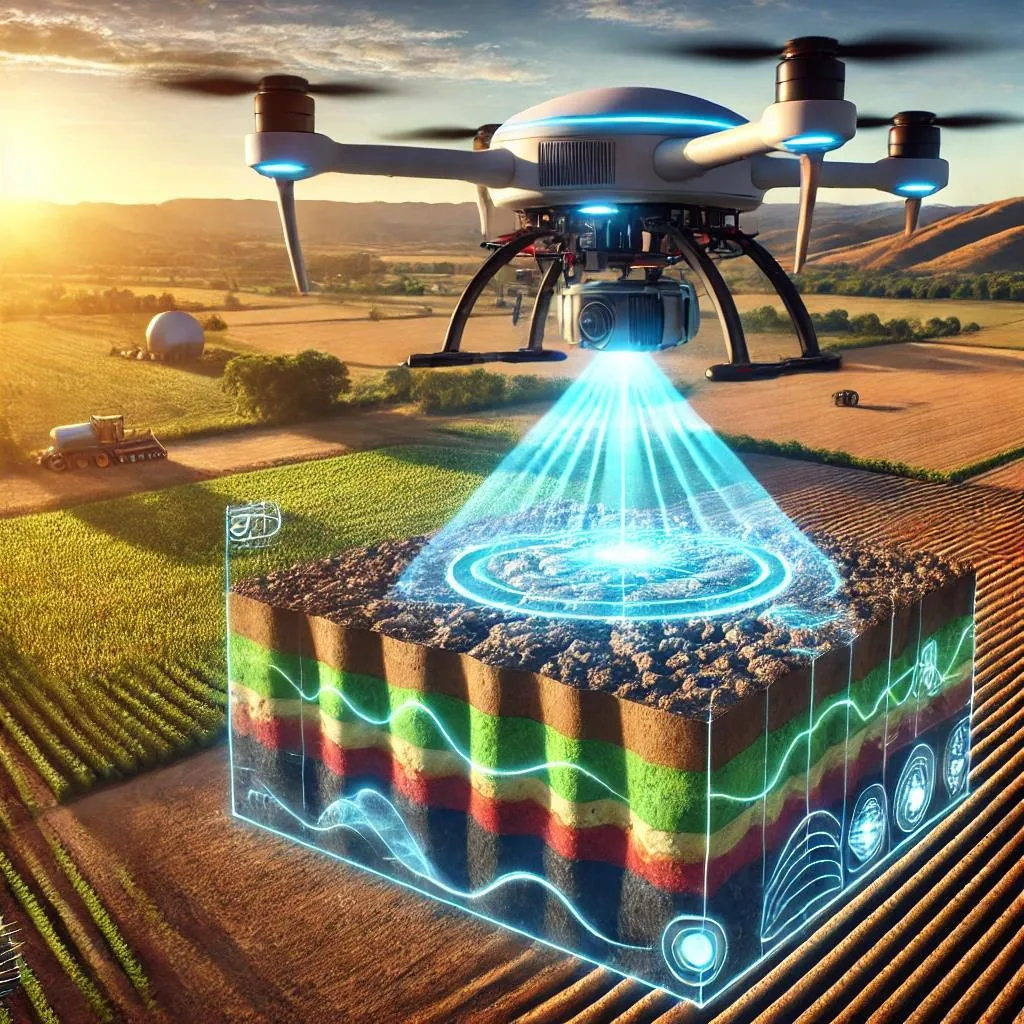
3D soil subsurface diagram

01 — Imaging

3D soil subsurface imaging

We redesign radar systems that integrate with drones and equip them with AI for soil subsurface 3D image creation and root-zone moisture classification — enabling optimized irrigation equipment placement.
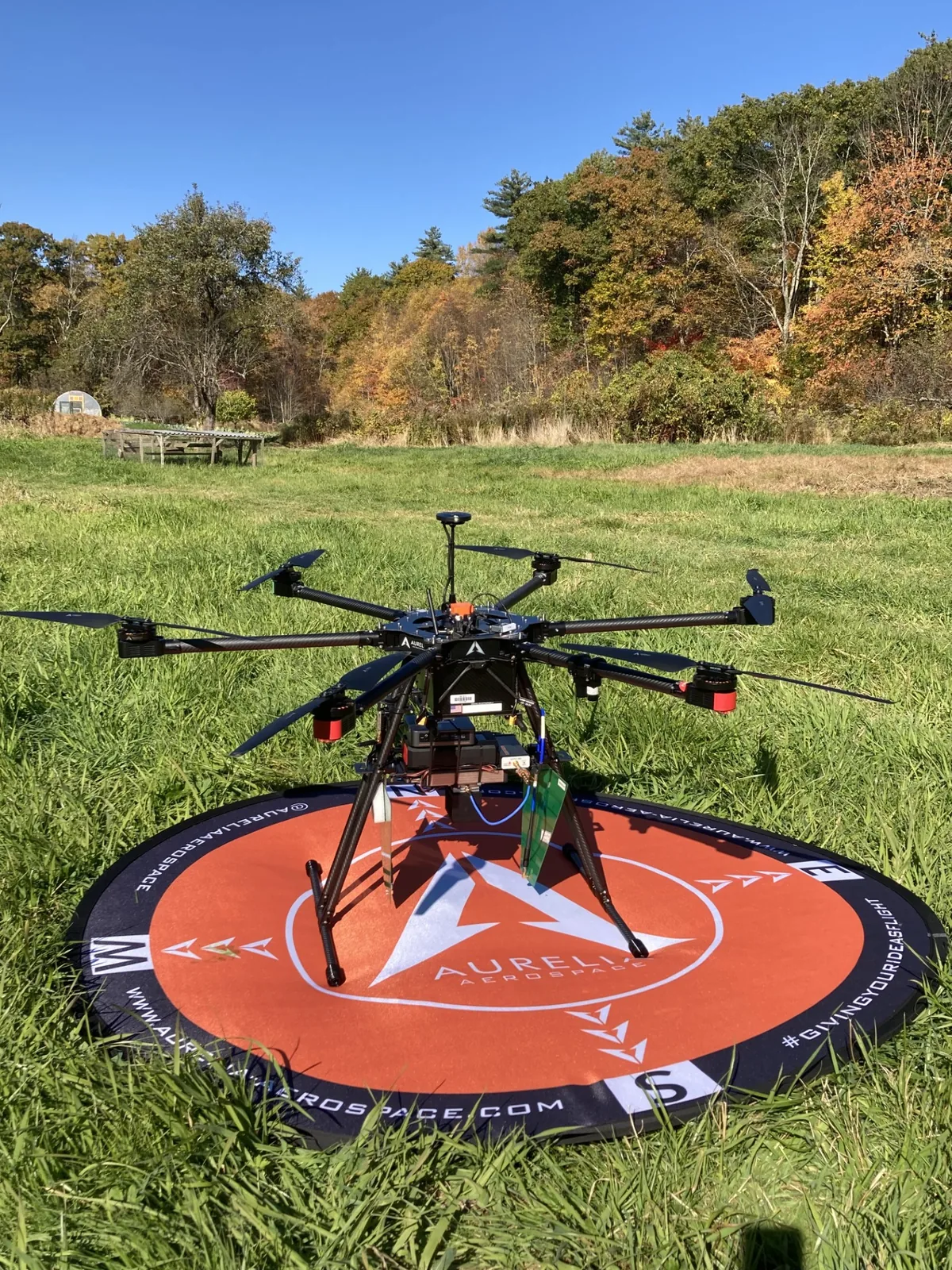
GPR-equipped drone over a farm field

02 — Platform

GPR-equipped drone platform

We developed a Ground Penetrating Radar and mounted it on a drone for aerial farm measurement. Tests run at our in-situ SoilX Lab at WPI and at real farmlands across the region.
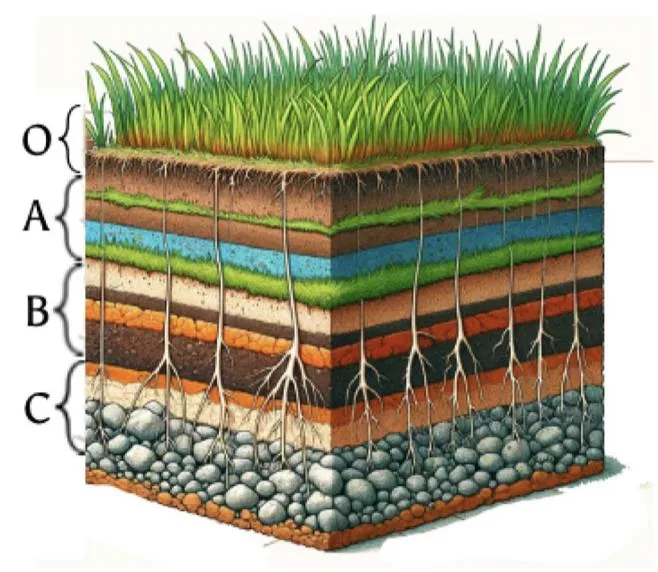
Machine learning signal processing visualization

03 — Intelligence

Machine learning signal processing

The drone-mounted radar converts received signals into 3D moisture and texture maps via machine learning — visualized as cross-sections or 3D models revealing soil layers, moisture pockets, and irrigation zones.
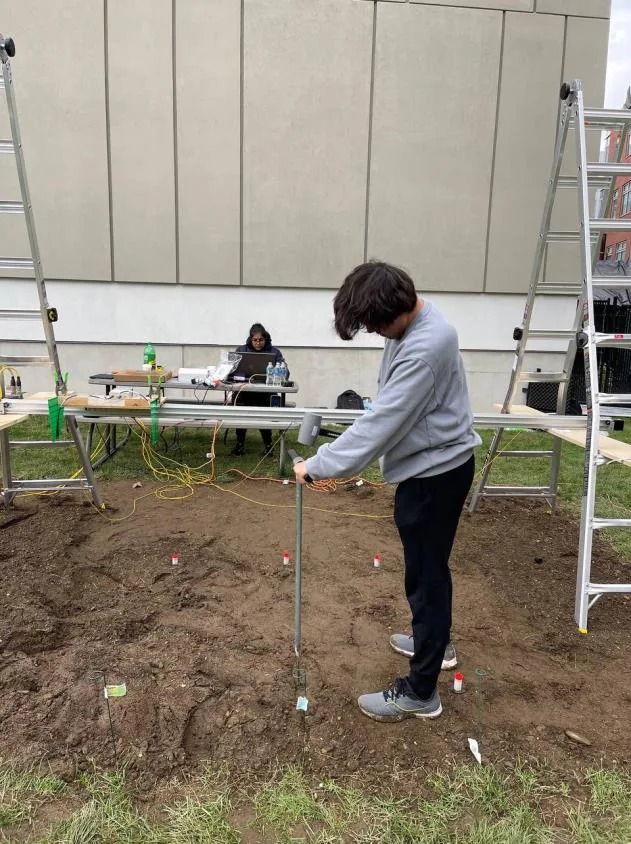
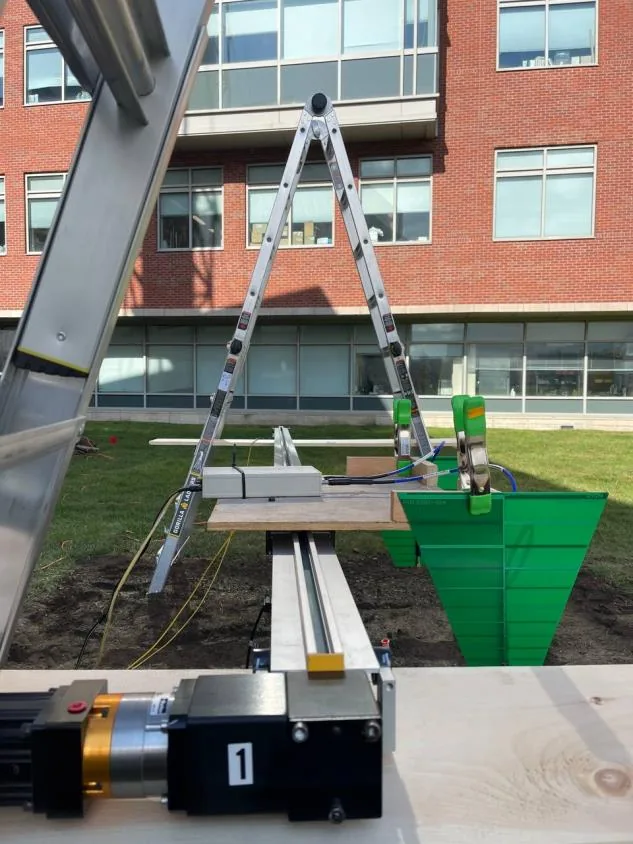
In-situ facility · WPI

The SoilX Lab

30 × 20 × 3

feet — excavated test area

An in-situ laboratory at WPI for controlled soil measurements. We excavated and equipped a 30×20×3 ft area for precise GPR data collection — enabling labeled datasets for supervised machine learning under real soil conditions.

SoilX lab field setup
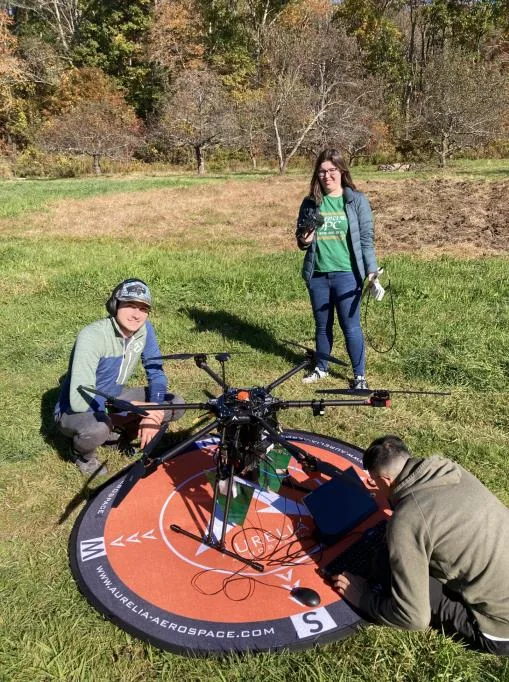
GPR equipment on rails Team with drone in field

Recent Publications

Toward Intelligent GPR: Wavelet Scattering Networks for Soil Water Content Prediction

IEEE Transactions on AgriFood Electronics Journal · 2026

FDTD Medium Dimension Selection Guidelines for GPR Synthetic Data Generation

IEEE Geoscience and Remote Sensing Letters, vol. 22 Journal · 2025

PDF →

Advancing Precision Agriculture: Machine Learning-Enhanced GPR Analysis for Root-Zone Soil Moisture Assessment in Mega Farms

IEEE Transactions on AgriFood Electronics Journal · 2024

PDF →
View all publications →